
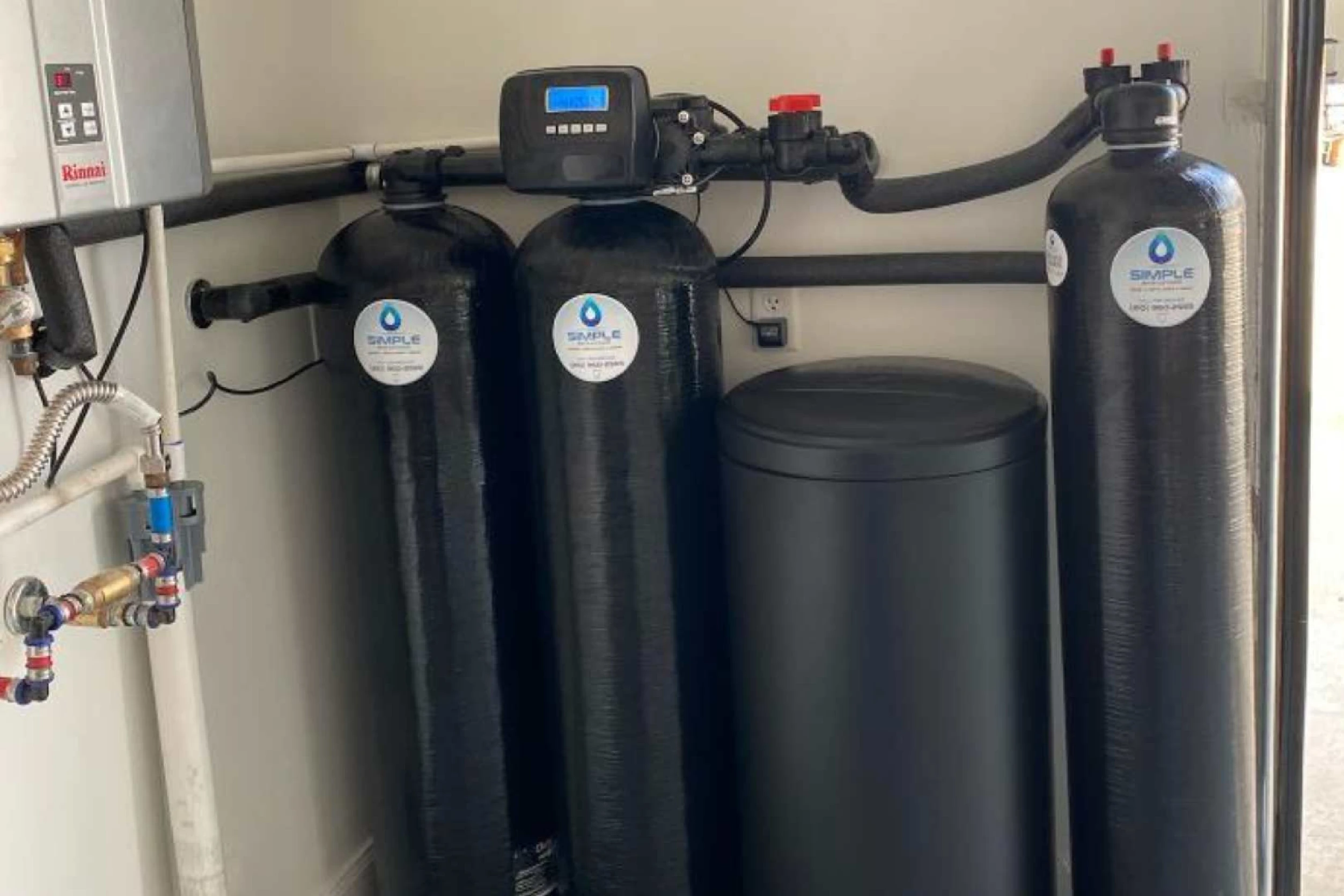
What is a Water Softener?
A water softening system is a set of components designed to treat hard water by removing hardness-causing minerals like calcium and magnesium.
How Does It Work?
Water softeners use a process called ion exchange where negatively charged resin beads attract and trap positively charged mineral ions, effectively softening the water.
Components of a Water Softener
In general, a water softener system consists of three main components: the resin tank, the brine tank, and the control valve.
- The Resin Tank
- The main component of the system, responsible for the actual water softening.
- Contains a bed of resin beads (small, negatively charged plastic beads).
- The beads attract and hold onto the calcium and magnesium ions in hard water and release sodium or potassium ions in their place.
- The Brine Tank
- This tank holds salt, which is used to regenerate the resin beads.
- When the beads are full of hard water minerals, a brine solution is sent through the resin tank to flush out the trapped minerals.
- The salt also helps to restore the resin beads’ ability to exchange ions.
- The Control Valve
- The valve controls the water flow and directs it through the different stages of the softening process.
- Manages the regeneration cycles, ensuring the resin is replenished with salt.
- Typically located on top of the resin tank and operates the system’s various cycles.